


Key Takeaways:
- PSI Controls Everything: The right air bag suspension PSI keeps your truck level, stable, and safe under any load.
- Empty vs Loaded: Running the wrong pressure when empty or loaded causes sag, sway, and premature wear.
- Check Before Every Haul: Always verify air spring pressure before hooking up a trailer or loading the bed.
Setting the correct air bag suspension PSI is not about picking one number and leaving it. The right pressure depends on what your truck is carrying at any given moment. At Pacbrake, we put together this guide to help you dial in air spring pressure for every situation your truck faces.
In this piece, we’ll examine everything you need to know about air bag suspension PSI.
Why PSI Setting Matters More Than You Think
Getting air bag suspension PSI right is not a one-time task. It changes with every load you carry and every road condition you face.
Air Spring Pressure Basics
Air spring pressure creates resistance inside the bag that counteracts rear axle compression. Too little pressure under load causes sag and vague steering. Too much on an empty truck transmits every road imperfection into the cab. Our air suspension systems can match pressure to the actual load on your axle at all times.
Empty Truck PSI
Running at zero PSI on standard ALPHA HD and ALPHA SD kits risks bag wall contact and premature wear. A safe empty starting point is 5 to 15 PSI. Always confirm the minimum for your specific kit in your installation manual before running unloaded.
PSI Under Load
Add pressure incrementally and check your truck's stance before adding more. A level truck front to rear is the target. If the rear still sits lower, add pressure in small steps. If it sits higher, bleed some off. The right PSI returns your truck to a level factory stance under the current load.
The Federal Motor Carrier Safety Administration (the US DOT agency), established in 2000 to reduce crashes and fatalities involving large trucks, mandates under 49 CFR 393.75 that cold inflation pressure must not be less than that specified for the load being carried, codifying in federal regulation the same principle that drives correct air spring pressure management on every loaded haul.
Maximum Pressure Limits
Every Pacbrake kit has a rated maximum operating pressure. Exceeding it stresses bag walls, end caps, and brackets beyond design limits. Over-inflation does not add load capacity - it only accelerates wear.
The U.S. Tire Manufacturers Association, the national trade association developing commercial vehicle safety standards since 1915 with 55 manufacturing facilities across 16 states, identifies improper inflation as the single most important factor affecting safety, performance, and service life, a principle that applies equally to air spring bags operating above their rated maximum as it does to over-inflated tires. If your truck sags at max-rated pressure, step up to a higher-capacity kit.
How To Read And Adjust Your Air Bag PSI
Knowing the right pressure range is only half the job. Reading and adjusting it correctly is what keeps your truck performing at every load condition.
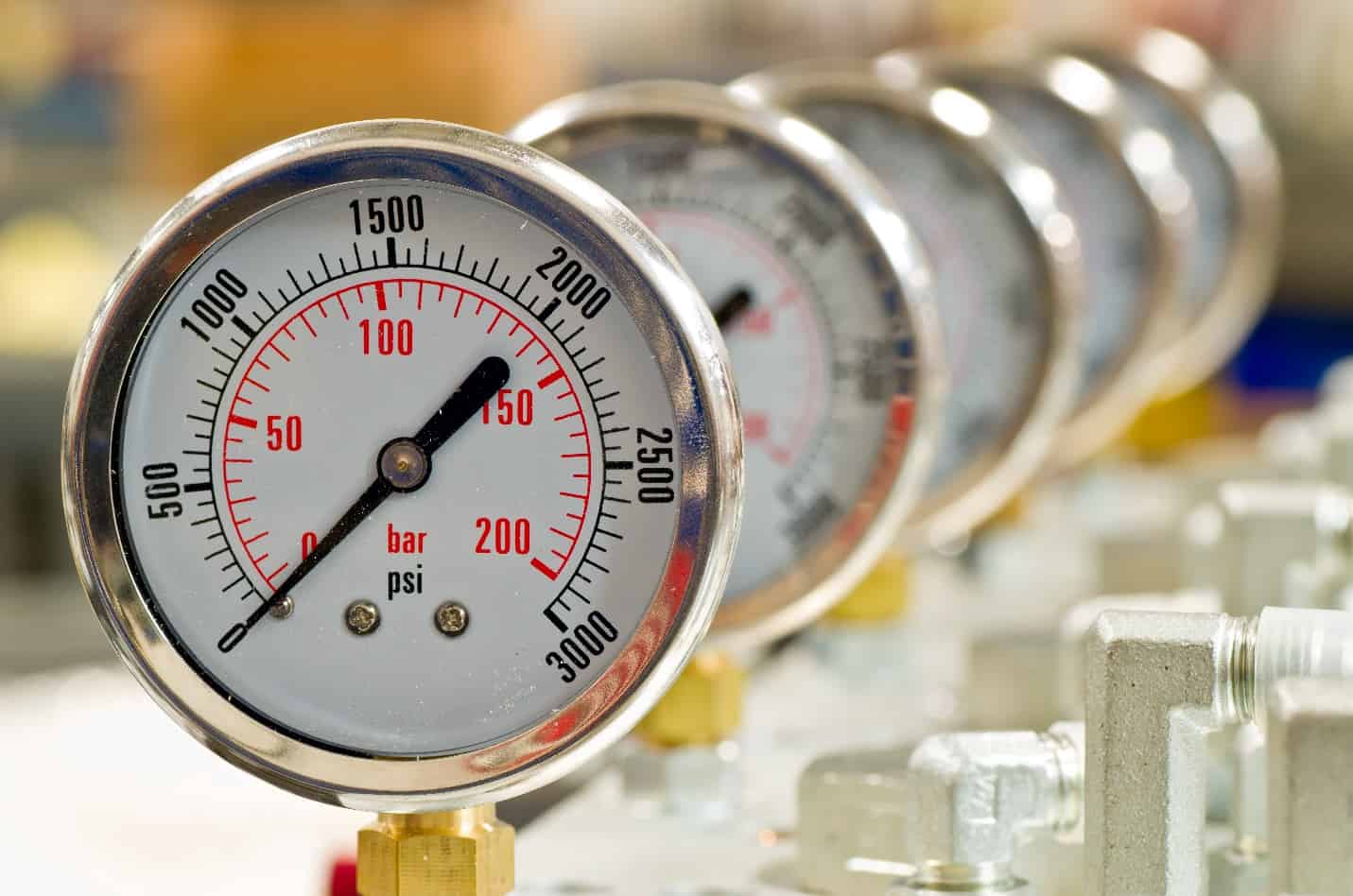
Alt Image Text: How To Set The Right PSI For Your Air Suspension
Reading Your Gauge Correctly
A dual needle gauge shows pressure in both bags simultaneously, so you can spot imbalances at a glance. A digital pressure sensor gives a precise numerical reading easier to confirm from the driver's seat. Always check the pressure on level ground. Browse our full suspension lineup for gauges that pair directly with your kit.
Air Bag Suspension PSI Chart
- General ranges by load: Empty 5 to 15 PSI.
- Light load up to 2,000 lbs: 20 to 35 PSI.
- Medium load 2,000 to 3,500 lbs: 35 to 55 PSI.
- Heavy haul 3,500 to 5,000 lbs: 55 to 80 PSI.
Always verify against your kit's installation guide as ranges vary by product.
When To Adjust Pressure
Adjust every time your load changes significantly. Loading the bed, hooking up a trailer, driving mountain grades - each calls for a pressure check. A minute spent adjusting before you pull out keeps your truck stable through every mile.
Front vs Rear Pressure
Air bags work on the rear axle only. If your truck has a front rake issue, that's a conversation about a leveling kit. Our leveling kits address front height correction separately from rear load support.
Signs Your PSI Is Off
Your truck will tell you when the pressure is wrong. Here is what to look for before a small issue becomes an expensive repair.
- Rear Sag: Rear end drops, nose rises, steering goes light, pressure is too low for the current payload.
- Harsh Ride: Empty truck bounces hard on every bump, bags are over-inflated for current load conditions.
- Uneven Stance: One side sits higher than the other; pressure differs between the left and right bags.
- Constant Pressure Loss: Bags deflate between drives; a fitting, valve, or air line needs immediate inspection. The Commercial Vehicle Safety Alliance, the nonprofit organization of 13,000+ commercial vehicle safety enforcement officials across North America dedicated to uniform inspection standards since 1980, includes suspension and air system integrity in its North American Standard Inspection Program — making a deflating air system not just a performance issue but a roadside compliance concern for any truck subject to commercial vehicle inspection criteria.
Catching these signs early saves your bags, brackets, and rear suspension from unnecessary wear on every run.
Pressure Gauges And Controls
Knowing your PSI means nothing without the right tools to read and manage it accurately. These are the pressure monitoring products we build to work directly with our air suspension systems.
HP10010 Mechanical Air Gauge: Dual Needle


HP10010 Mechanical Air Gauge - Dual Needle
A dual needle mechanical gauge that shows pressure in both air bags simultaneously on a single face. Lets you confirm equal pressure across both bags at a glance without a digital readout or power source required.
HP10219 Air Pressure Sensor
Air Pressure Sensor

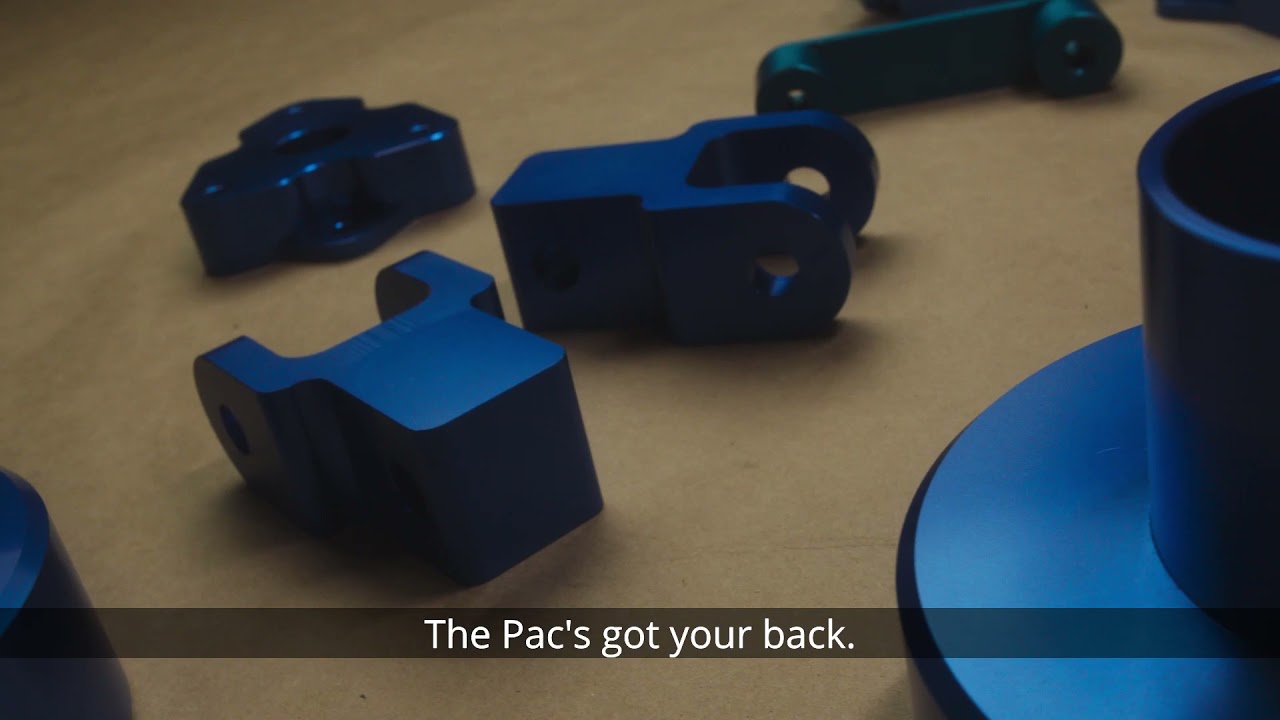

HP10219 Air Pressure Sensor
A digital air pressure sensor that delivers a precise numerical pressure reading. Easier to read accurately in low light conditions and from the driver's seat compared to a mechanical needle gauge.
HP10110 Pressure Switch Kit For Air Tanks With 105-135 PSI


HP10110 Pressure Switch Kit (for Air Tanks with 105-135 psi)
Designed for use on vehicles with an existing onboard air system. Works with paddle-valve in-cab controls to automate pressure management within the 105-135 PSI operating range for onboard air-tank setups.
Final Thoughts
Getting PSI right is the difference between an air suspension system that works and one that just sits there. Pressure set to load means a level truck, a controlled tow, and bags that last the life of your rig. Pacbrake builds every ALPHA HD and ALPHA SD kit to perform within a defined pressure range because we engineer for real load conditions, not average ones. Quality, durability, and value start with knowing how to run the system correctly.
As North America's Tow-Haul Experts, we back every kit with the tools, guides, and support you need to get it right. Browse our full Air Suspension lineup and run your truck at the pressure it deserves.
As summer winds down, prepare your truck for fall’s heavier towing and hauling demands with a quick check of its suspension, braking, and air systems before changing weather and workloads put them to the test. Nearly 65 years after Pacbrake began serving the diesel industry, our partnership with Diesel Pro Network is creating new ways to improve access, strengthen support, and better serve independent diesel shops across North America. Clean installs. Fewer headaches. More value per RO. And another truck out of the bay and back on the road.Check out our Blog

End of Summer, Not End of Towing: Preparing Your Truck for Fall Workloads
Growing Together: Pacbrake and the Diesel Pro Network
Installer Tips: Fast, Clean Leveling Kit Installs That Keep Bays Moving
Start at a pressure that levels your truck and adjust in small increments from there.Frequently Asked Questions