

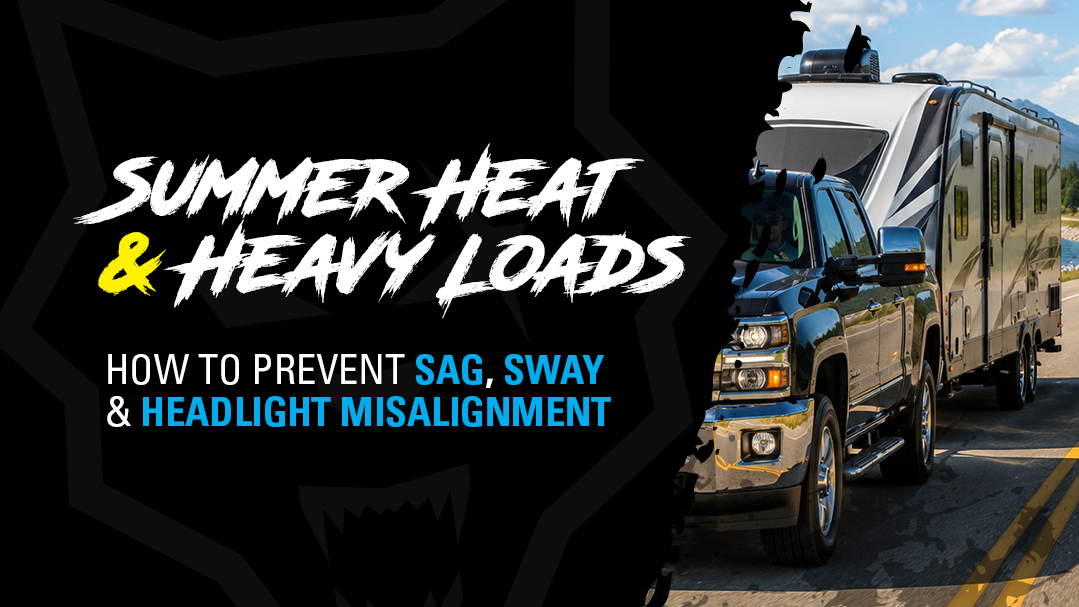
Summer is when trucks work hardest.
Travel trailers, boats, campers, coolers, passengers, tools, and weekend gear all add weight. At the same time, high temperatures, long highway runs, steep grades, and rough roads put additional stress on the tow vehicle, trailer, tires, and suspension.
Before hitting the road, make sure your truck is carrying the load level, stable, and within its factory ratings.
Rear Sag Is More Than a Bad Look
When trailer tongue weight or cargo compresses the rear suspension, the truck begins to sit nose-high. This can make the steering feel lighter, increase the chance of bottoming out, reduce stability, and make the truck more sensitive to crosswinds or passing traffic.
Rear sag can also affect headlight aim. As the back of the truck drops and the front rises, the headlights point higher than intended. That can reduce useful light on the road while creating glare for oncoming drivers.
Get the Load Right First
Air suspension can help support and level an approved load, but it cannot correct an overloaded or improperly loaded truck and trailer.
Before adjusting the suspension, confirm the truck’s available payload and include the weight of passengers, cargo, hitch equipment, and trailer tongue weight. Cargo should be properly distributed and secured, while the hitch, ball mount, tires, and trailer components must all be correctly rated.
Trailer sway can be caused by improper tongue weight, poor cargo placement, excessive speed, strong wind, or an incorrectly matched hitch. Air springs can help the truck remain more level and controlled, but they are not a replacement for proper weight distribution or sway-control equipment when required.
Add Adjustable Support With ALPHA™
Pacbrake ALPHA™ Air Suspension works with the truck’s existing suspension to provide adjustable rear load support.
Add air when the trailer is connected or the truck bed is loaded to help reduce sag and bring the truck back toward a level stance. When the load comes off, reduce the pressure according to the kit instructions for a more comfortable unloaded ride.
Unlike fixed suspension upgrades, air springs can be adjusted to suit different loads. The same truck can be set up for a travel trailer one weekend, a boat the next, and an empty daily commute during the week.
By helping reduce rear squat, bottoming out, uneven side-to-side loads, and poor headlight aim, ALPHA™ gives drivers more control over how their truck handles changing demands.
Make Adjustments Easier With BRAVO™
Summer loads rarely stay the same.
Fresh-water tanks are filled and emptied. Fuel is used. Coolers, bikes, firewood, and camping equipment move between the truck and trailer. Each change can affect how the truck sits.
Pacbrake BRAVO™ Wireless Air Controls let you adjust air spring pressure from a compatible smartphone or standalone remote. Depending on the system, drivers can monitor pressure, control the air springs independently or simultaneously, and save presets for frequently used load configurations.
Because BRAVO™ connects through Bluetooth, adjustments can be made even when cellular service is unavailable. Instead of searching for a compressor or manually filling each air spring, drivers can fine-tune the suspension before leaving the driveway or when the load changes during the trip.
Don’t Forget the Tires
Heavy loads and summer heat also place greater demands on truck and trailer tires.
Check every tire, including the spare, when cold and inflate it to the pressure specified by the vehicle or trailer manufacturer. Inspect for cracking, bulges, embedded objects, uneven wear, and insufficient tread depth.
Make sure every tire is properly rated for the load it is carrying. Do not rely solely on the tire-pressure monitoring system, as it may not provide a warning until pressure has already dropped significantly.
Do a Quick Level Check
Once the truck and trailer are fully loaded, park on a flat surface and check how the combination sits. Compare the truck’s ride height before and after loading, then adjust the air springs accordingly.
Confirm that the truck and trailer are level, check the headlight beam against a wall or garage door, and take a short low-speed test drive. Steering, braking, and handling should feel predictable and controlled.
Air springs should help the truck manage the load—not hide an overloaded or incorrectly configured setup.
Level the Load Before the Heat Builds
Summer towing should feel controlled, not exhausting.
Pacbrake ALPHA™ Air Suspension adds adjustable load support to help reduce sag, improve the truck’s stance, and keep the headlights aimed where they belong. Add BRAVO™ Wireless Air Controls for convenient pressure adjustments, live feedback, and saved settings as the load changes.
The result is a truck that is better prepared for heavy summer work—from the driveway to the highway and everywhere in between.
Air suspension and wireless air controls do not increase your vehicle’s factory GVWR, payload rating, or towing capacity. Always remain within the limits specified by the vehicle, hitch, tire, and trailer manufacturers.

